
Pitt County Probate Records
North Carolina places probate work with the elected Clerk of Superior Court. In Pitt County, that means estates, wills, letters, inventories, accountings, guardianships, incompetency files, and many special proceedings are handled through the clerk at the Pitt County Courthouse. The clerk acts as court administrator and probate judge for this part of the court system.
Probate files can include the original will filed after death, applications for letters testamentary or letters of administration, oaths, bonds, inventories, annual and final accounts, creditor notices, orders of the clerk, small-estate material, guardianship filings, and special proceedings related to estate property. Some entries may be visible through a case search, but the full file often requires clerk access.
That matters because an estate file is not just a name index. It can show who applied to act, whether the clerk issued letters, whether a bond was required or waived, what property was inventoried, what claims were filed, and whether annual or final accounts were submitted. When property, creditor claims, or family disputes are involved, the clerk's file is the record that controls the probate history.
The official North Carolina wills and estates help topic is the statewide starting point for probate procedures, forms, and estate terms.
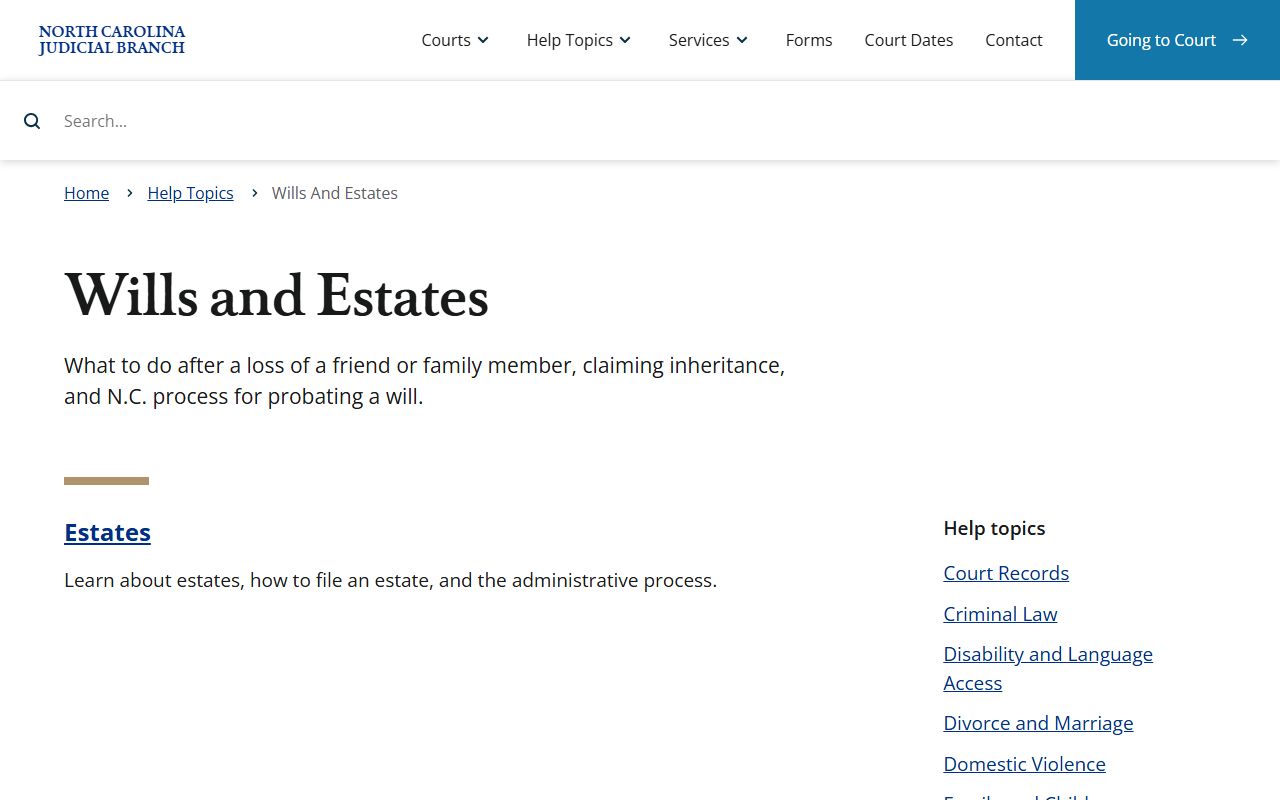
That state source supports the local Pitt County probate process because the clerk follows North Carolina estate rules.
Pitt Probate Terms
Probate records use terms that have specific court meanings. These definitions help read a Pitt County estate file without treating every filing as a final order. A person named in an application may not yet have authority until the clerk issues the proper letters.
The same caution applies to guardianship and incompetency files. A petition, notice, or hearing entry is part of the case history, but the clerk's order states the legal result. If a term is unclear, use the court forms and clerk records together rather than relying on one docket line.
- Testator
- The person who made a will.
- Executor
- The person named in a will to carry out estate duties after appointment.
- Intestate
- A death without a valid will controlling the estate.
- Guardianship
- A court-supervised case for a person or property interest that needs legal protection.
- Conservatorship
- A term often used for property-management protection in some states; in North Carolina, guardianship and incompetency terminology is the safer local phrasing.
Search Pitt Estate Files
Start with the N.C. eCourts Portal when searching for a Pitt County probate case that may be indexed online. Search by estate name, decedent name, party name, or file number if known. If the Portal does not show the file, the next step is the Clerk of Superior Court because older paper records, certified copies, and documents not visible to anonymous users remain clerk functions.
Use broad search terms first when the exact estate caption is unknown. A decedent may be indexed by full name, estate name, or a case caption that includes an applicant or personal representative. If the estate involves a special proceeding, real property, guardianship, or incompetency matter, the case type may not look like a simple will filing.
- Search the Portal by decedent or estate name, then narrow to Pitt County when filters are available.
- Record the file number, case caption, and estate or special proceeding type from the result.
- Contact the Clerk of Superior Court for documents, certified copies, or file review when images are not online.
- Use the official forms library for estate, guardianship, or special proceeding forms before filing.
- Verify restricted guardianship, minor, medical, or sealed material with the clerk instead of assuming it is public.
Note: A missing online result does not prove that no Pitt County probate file exists, especially for older or restricted files.
Pitt Probate Court Office
Pitt County does not have a separate probate courthouse. The probate access point is the Estates Division of the Clerk of Superior Court at the county courthouse. Use the courthouse contact for estate-file questions, certified copies, letters, and records that are not available through public online search.
Visitors should bring the decedent name, approximate date of death, case number if known, and the document type needed. For certified letters or certified orders, be clear that certification is required. For file review, ask whether the file is available at the counter, stored off site, restricted, or requires advance handling by the estates staff.
Estates Division of the Clerk of Superior Court
100 West 3rd Street
Greenville, NC 27835
252-695-7100
Use official court page for current hours.
Pitt Probate Filing Fees
Probate filing and copy charges are court fees. The research directs users to the statewide court costs and fees chart and does not provide fixed current amounts. That matters because estate fees can change, and the proper charge may depend on filing type, copy type, certification, or estate procedure.
Estate costs can also depend on what the filer is asking the clerk to do. Opening an estate, requesting letters, copying a file, certifying a document, or filing a guardianship matter may not carry the same charge. If the request is by mail, confirm payment form and return-mail instructions with the clerk before sending documents.
| Item | Office | Fee / Note |
|---|---|---|
| Estate or probate filing | Clerk of Superior Court | Use the current statewide court costs and fees chart. |
| Letters testamentary or administration | Clerk of Superior Court | Confirm current issuance and copy fees with the clerk. |
| Plain probate copy | Clerk of Superior Court | Use the current statewide court costs and fees chart. |
| Certified probate copy | Clerk of Superior Court | Use the current statewide court costs and fees chart. |
| Guardianship or incompetency filing | Clerk of Superior Court | Fees and access can depend on case type and restriction rules. |
Pitt Probate Record Fields
A probate record is more than a will. It is a case file showing who asked the clerk for authority, what authority was granted, what assets and claims were reported, and how the estate or protected matter moved through clerk review. These fields are useful when comparing a Portal result to a paper or certified file.
Some fields are more useful than others for access. The file number helps the clerk locate the record. The letters issued show who has authority to act. Inventories and accountings help trace estate administration. Orders show what the clerk approved. Claims can show creditor activity when they are filed in the estate matter.
| Field / Record Element | What It Shows |
|---|---|
| Estate name | Usually the decedent name or estate caption. |
| File number | The clerk-assigned file number used for copies and filings. |
| Applicant / personal representative | Executor, administrator, collector, or guardian information. |
| Letters issued | The authority granted by the clerk. |
| Inventory and accountings | Assets, annual reports, final accounting, and estate activity. |
| Orders and claims | Clerk orders and creditor claims where filed. |
Pitt Probate Forms
The North Carolina court forms library is the official source for estate, guardianship, civil, criminal, family, expunction, and domestic violence forms. Pitt County probate filings should use current Judicial Branch forms rather than copied examples from old files.
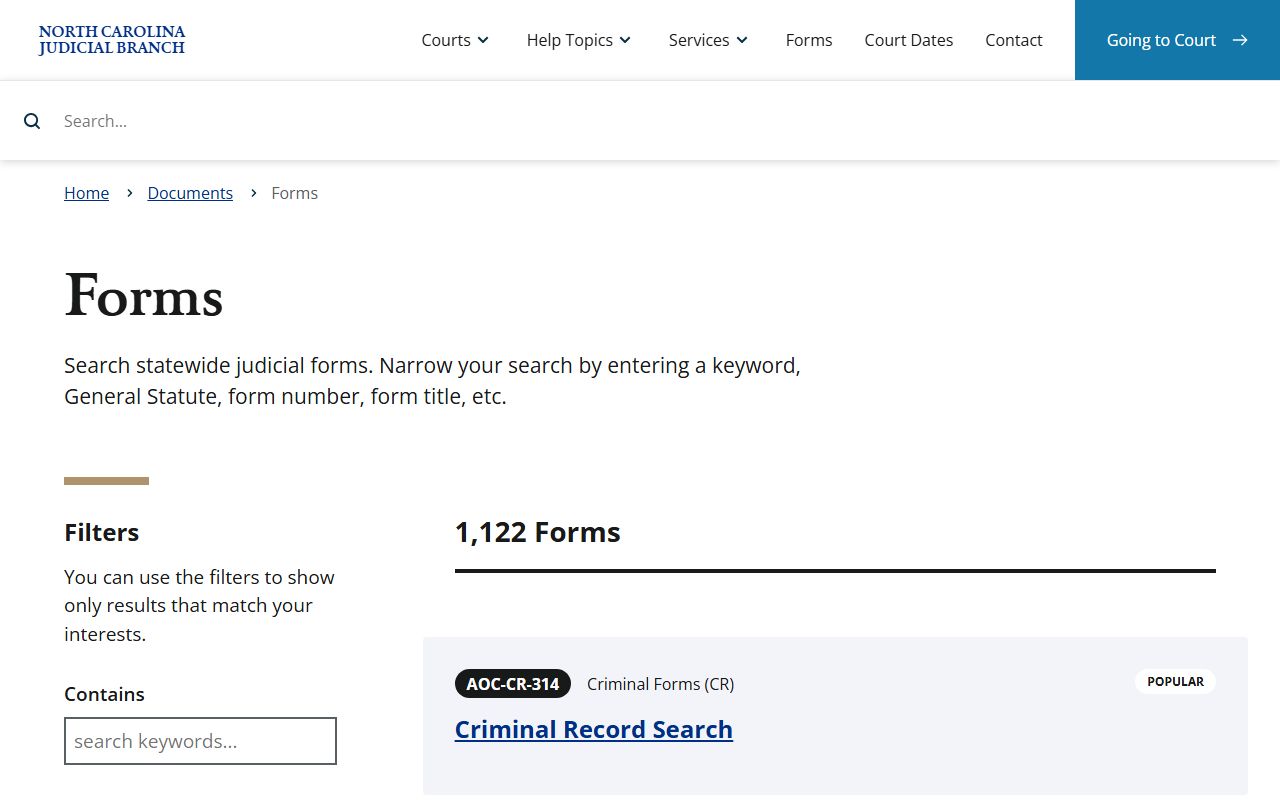
The forms library is especially important for estates because the wrong form can delay qualification or clerk review.
Restricted Pitt Probate Records
Many estate filings are public, but not every probate-related record is open. Guardianship, incompetency, minor-related, medical, and sensitive personal material may be restricted. Personal identifiers can also be redacted from public copies. Sealed orders and confidential attachments should be handled through the clerk, not through informal online sharing.
Small-estate procedures may be available in some North Carolina situations, but eligibility depends on current law, estate value, property type, surviving-spouse issues, and statutory conditions. The research does not provide a verified threshold. Use the Judicial Branch estates page and the Clerk of Superior Court before stating that a Pitt County estate qualifies.
Public access should also be separated from authority to act. A person may be able to inspect some estate material without being the personal representative, but only the person appointed by the clerk has the legal authority shown in letters. Banks, buyers, title companies, and agencies often require certified letters or certified orders rather than a public docket printout.
For sensitive files, ask the clerk which parts can be viewed and which parts require party status or a court order. That approach keeps the Pitt County probate records search tied to the official access rule instead of guessing from an online summary. It also helps prevent misuse of partial estate data.