
Pitt County Marriage Licenses
Marriage licenses in Pitt County are handled by the Pitt County Register of Deeds, not by the Clerk of Superior Court. The Register of Deeds records marriage-related documents, real property instruments, assumed names, notary material, and other county recording matters. The state court system still matters for ceremonies because North Carolina magistrates may perform marriages, but the license and recorded marriage record are Register of Deeds records.
The local eSearch banner identifies the office as the Pitt County, North Carolina Register of Deeds and names Lisa P. Nichols as Register of Deeds. That same system allows guest access, so a user does not need an account just to begin a public search. The Register of Deeds also posts an Identity Theft Protection Act notice. A person whose private information appears in an online recorded document may request online redaction at no charge when the request identifies the book, page, and location of the private information.
This split is the key to using Pitt County marriage records correctly. The Register of Deeds records the license after the ceremony is returned. The court clerk does not create the marriage license, though a magistrate may perform the ceremony. A person who needs proof of marriage should ask the recording or vital-record office for a certified marriage record, while a person who needs proof of a court case should use the Clerk of Superior Court.
The North Carolina Judicial Branch marriage help page gives statewide context on marriage law, officiants, and magistrate ceremonies.
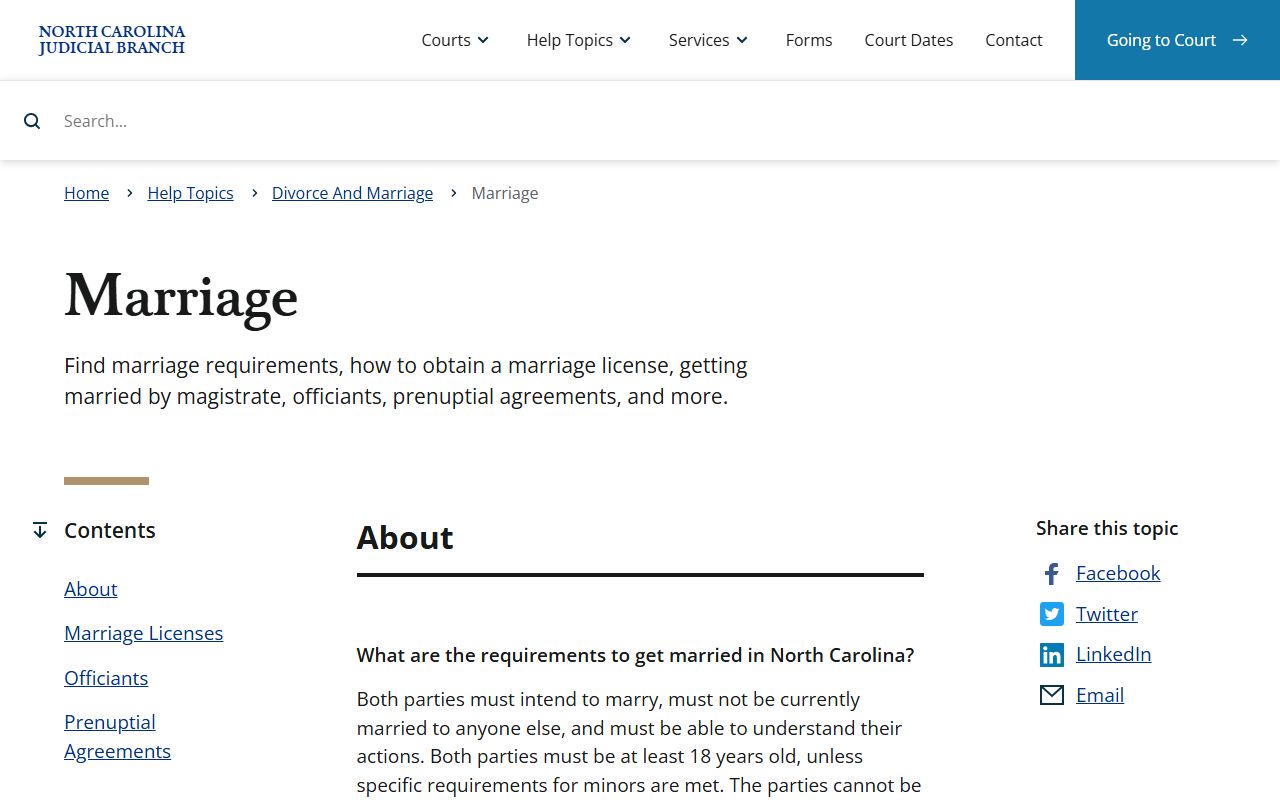
That state marriage source helps separate the ceremony rules from the Pitt County Register of Deeds record channel.
Apply for Pitt Marriage Records
A marriage license application should be prepared before visiting or contacting the Register of Deeds. Both applicants should expect to provide identity details and personal information required by the office and state law. The research file does not provide a current Pitt County fee amount, so fee language should stay tied to the county's current schedule rather than an invented dollar figure.
After the license is issued, the ceremony must be completed by an authorized officiant or magistrate and the completed license must be returned for recording. That return step is what creates the record that can later be searched or certified. If the record is not appearing in an online index, the issue may be timing, spelling, date range, or the need to contact the Register of Deeds counter directly.
- Confirm the current Pitt County Register of Deeds marriage-license process and fee before applying.
- Gather required identification and personal details for both applicants.
- Apply through the Register of Deeds, which is the county office for marriage licenses.
- Have the ceremony performed by an authorized officiant or magistrate after the license is issued.
- Make sure the completed license is returned for recording so certified marriage records can later be issued.
North Carolina Chapter 51 marriage statutes provide the legal background for marriage in the state.
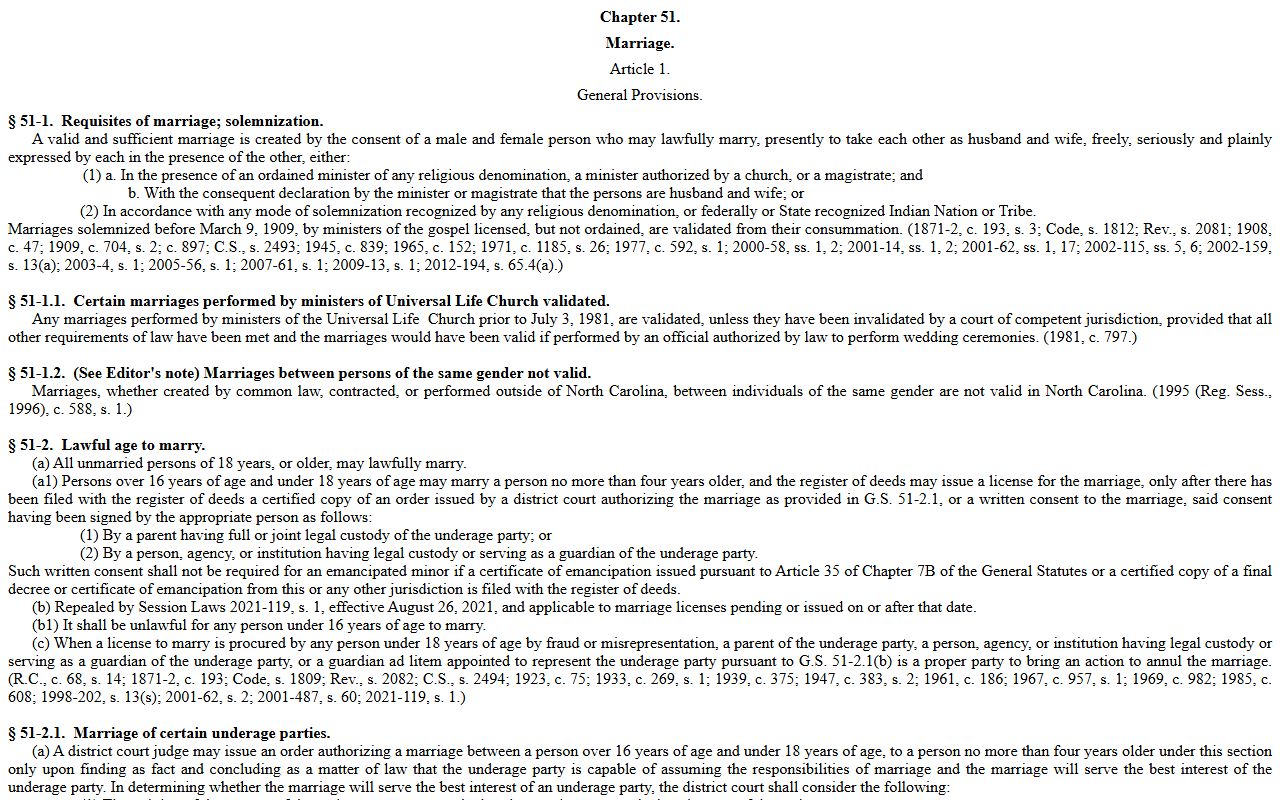
Chapter 51 supports the statewide rules, while Pitt County controls the local license and recording counter.
Pitt Marriage Application Fields
The Register of Deeds application process asks for enough information to identify both applicants and create a record that can later be certified. The research did not capture the current Pitt County application screen, so this table uses only field types supported by the marriage-license process described in the research. Applicants should confirm the exact form and identification rules with the Register of Deeds before relying on a visit.
Names and dates should be checked before the license is issued because later certified copies will mirror the recorded information. If a record search is being done years later, try name variants, former names, and date ranges. Marriage indexes may not use the same spelling or spacing that appears on modern identification, especially on older records.
| Field | Required | Notes |
|---|---|---|
| Applicant legal names | Yes | Used to issue the license and index the recorded marriage record. |
| Identification details | Yes | Bring the identification required by the Register of Deeds. |
| Personal information | Yes | Provide the data required by state and county marriage-license rules. |
| Prior marriage information | As applicable | Confirm what proof or dates are required if either applicant was previously married. |
| Certification request | Optional | Certified copies are requested from the Register of Deeds or state vital-record channel after recording. |
Pitt County Family Fees
Marriage and divorce fees come from separate schedules. Marriage license and marriage-copy fees belong to the Register of Deeds or state vital-record channel. Divorce filing, court-copy, and certified judgment fees belong to the North Carolina Judicial Branch fee structure because divorce is a court case. Use the current official fee page before mailing or filing anything.
Fee questions should also be matched to the copy type. A plain copy can help with personal research, but many agencies require a certified copy. A divorce certificate may prove that a divorce occurred, while a certified divorce judgment from the court file may be needed to prove the terms of the judgment. The office can only quote the correct fee after the record type is clear.
| Item | Office | Fee / Note |
|---|---|---|
| Marriage license | Register of Deeds | Use the current Pitt County Register of Deeds fee schedule. |
| Certified marriage record | Register of Deeds / N.C. Vital Records | Use the current county or state vital-copy schedule. |
| Divorce filing | Clerk of Superior Court | Use the statewide court costs and fees chart. |
| Certified divorce judgment | Clerk of Superior Court | Use the statewide court costs and fees chart. |
| Online redaction request | Register of Deeds | The eSearch notice says qualifying online redaction requests are free. |
Note: Do not treat an online index result as a certified copy for passport, benefit, court, or name-change purposes.
Search Pitt Marriage Records
Pitt County recorded marriage material may be searched through the Register of Deeds eSearch portal when the record is available in that system. The sign-in screen supports account login and guest use. It also warns users to keep supported browsers, cookies, JavaScript, pop-up settings, and PDF viewing tools ready so images can load correctly.
For a Pitt County marriage records search, the online path is best treated as an index and image tool, not a guarantee that every certified need can be handled without the office. If the record is older, recently returned, hard to match by name, or needed for legal proof, the Register of Deeds or North Carolina Vital Records may still be the proper copy channel.
| Field Label | Type | Required | Options / Format Notes |
|---|---|---|---|
| User ID | text | Account only | Not needed for guest access. |
| Password | password | Account only | Password is case-sensitive. |
| Sign In | button | n/a | Submits account credentials. |
| Sign in as a Guest | button | n/a | Guest access is available without creating an account. |
| Create an Account | link | n/a | Optional account registration. |
Search Pitt Divorce Records
Divorce records are court records. Pitt County divorce actions are filed under North Carolina divorce law and maintained through the court system by the Clerk of Superior Court. A public divorce case can be searched in the N.C. eCourts Portal when it is available online, but certified divorce judgments and older or incomplete files must be requested from the clerk at the courthouse.
The North Carolina Judicial Branch divorce page and the Judicial Branch forms library provide filing basics and forms. Related custody, support, equitable distribution, and domestic-violence matters may be separate files or linked family cases, and some child-related details may be confidential.
A divorce file can show the case number, parties, filing date, hearings, orders, judgment, and related docket entries. It may not expose every document to the public online. Child custody, child support, protected addresses, abuse allegations, financial account numbers, and sealed materials can be limited or redacted. For that reason, a Pitt County divorce records search should end with clerk verification before the result is used for court, benefits, immigration, or name-change proof.
| Field Label | Type | Required | Options / Format Notes |
|---|---|---|---|
| Party Name | text | optional | Search by spouse or party name. |
| Case Number | text | optional | Best for exact match. |
| County / Location | dropdown/filter | optional | Choose Pitt County. |
| Case Type | dropdown/filter | optional | Use domestic, family, or divorce if exposed. |
| Filing Date Range | date | optional | Useful for common names or older cases. |
The Chapter 50 divorce and alimony statutes frame divorce actions in North Carolina.
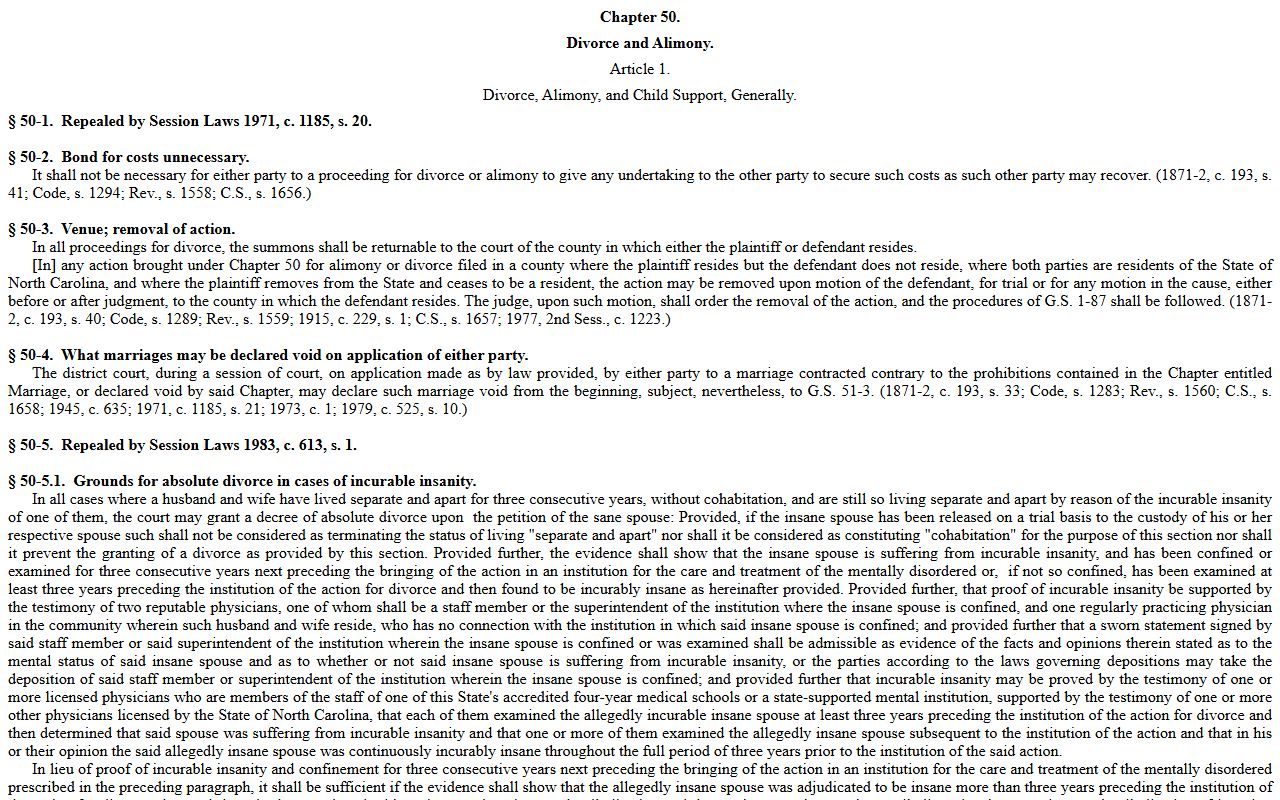
Those statutes explain why Pitt County divorce files belong in the court system rather than in the marriage-record channel.
Certified Pitt Family Copies
Certified marriage copies generally come from the Register of Deeds or North Carolina Vital Records, depending on the record type and need. Certified divorce judgments come from the Clerk of Superior Court because the judgment is part of the court file. Divorce certificates may also be available through state vital-record channels, but a certificate is not the same as the full divorce case file.
Use the right office for the proof needed. A person changing a name after marriage may need a certified marriage record. A person proving that a divorce was granted may need a certified divorce judgment or a vital-record certificate. A person reviewing litigation history, custody terms, support orders, or equitable distribution details needs the court file through the clerk or eCourts, subject to public-access limits.