
Pitt County Criminal Court Records
A criminal court record is the case file kept by the Clerk of Superior Court after a criminal matter is filed in court. For Pitt County, that file can begin with a warrant, citation, magistrate order, indictment, information, or other charging document. It can then collect hearing notices, bond entries, motions, pleas, orders, trial settings, verdicts, dismissals, judgments, sentencing terms, probation conditions, fines, costs, restitution, and appeal notices. The record follows the court case, not just the arrest event.
North Carolina's court structure matters. Superior Court is the primary trial court for felony criminal cases and certain appeals from District Court. District Court handles misdemeanors, infractions, traffic, first appearances, and other lower-level criminal matters. Magistrates handle initial criminal process, warrants, bonds, and first appearances within the District Court system. The local record office is the Pitt County Clerk of Superior Court at the courthouse in Greenville. For a closer look at the arrest-to-charge period before final court outcome, use the Pitt County court charge records page, but the criminal case file controls the disposition and sentence.
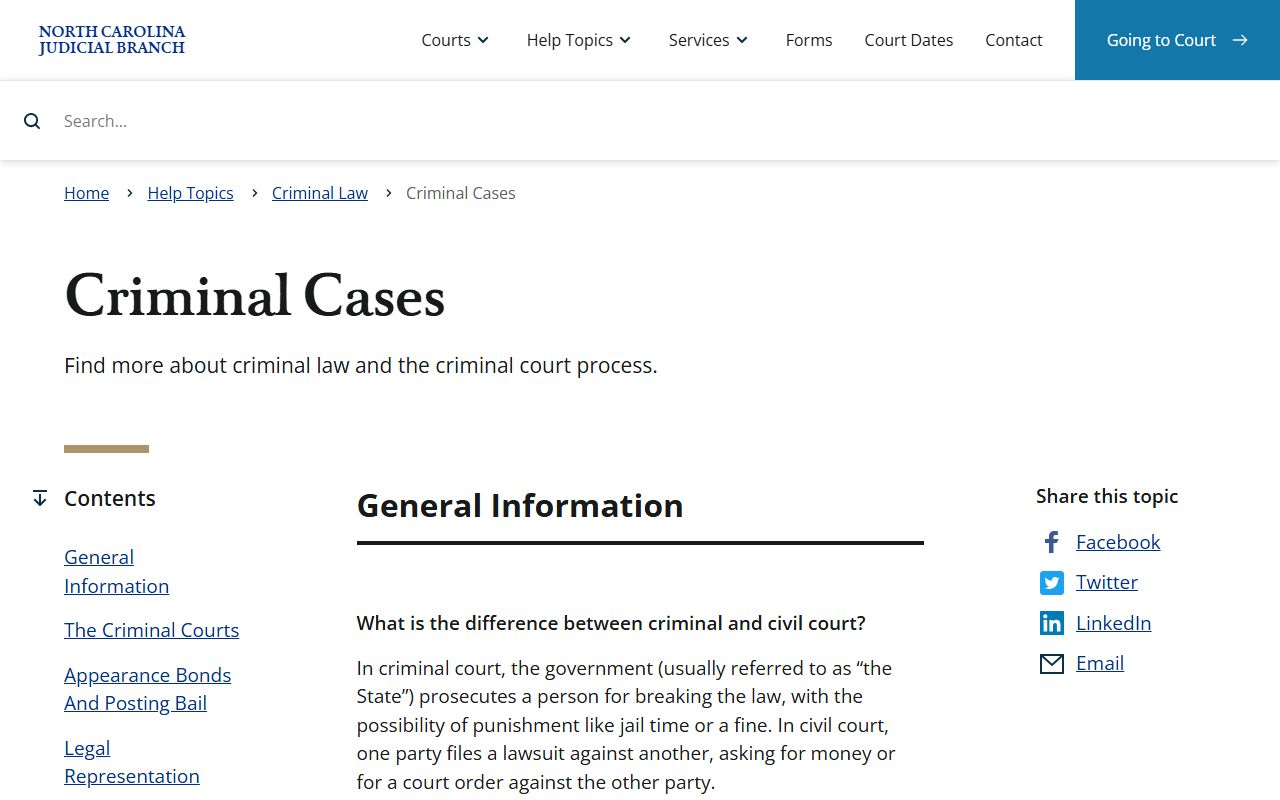
The official Judicial Branch criminal cases help topic is one of the source pages assigned to this record type.
Search Pitt County Criminal Records
The main official search path is the N.C. eCourts Portal. The Portal is statewide, so Pitt County users should filter by county or location when possible. Search by case number when known. If no case number is available, search by defendant name and narrow by case type, filing date, hearing date, or court location. Criminal court records may appear after the case has been filed and entered. A jail or charge result can appear before the complete court case is visible.
- Open the N.C. eCourts Portal and choose public case search.
- Search by defendant name, business name if relevant, case number, or citation number.
- Set Pitt County or Pitt County Courthouse as the location when the filter appears.
- Use criminal, infraction, traffic, filing-date, or hearing-date filters to narrow broad results.
- Open the matching case and read the docket, charges, hearings, pleas, disposition, and sentencing entries.
- Request certified copies or documents not visible online from the Pitt County Clerk of Superior Court.
The Pitt County Charge Inquiry and Pitt County Detainee Search tools are separate county applications. They are useful for current or recent charge and custody information, especially soon after arrest. They are not the final criminal court record. The court file should be checked through the Portal or clerk once the prosecution has been filed and the case moves through Superior Court or District Court.
Pitt County Criminal Case Flow
A criminal case may not follow every stage in the same way. Some misdemeanors resolve in District Court. Felonies may move through first appearance, probable cause steps, indictment, arraignment, pretrial motions, plea, trial, disposition, and sentencing in Superior Court. Dismissals, reductions, continuances, deferred outcomes, and appeals can change the path. The docket should be read as a sequence because a later entry may modify or replace the meaning of an earlier charge or setting.
Case flow: Charges Filed › Arraignment › Pretrial / Motions › Plea or Trial › Disposition › Sentencing
| Stage | What Happens |
|---|---|
| Charges Filed | The court case begins through a warrant, citation, magistrate order, indictment, information, or other charging document. |
| Arraignment | The defendant is formally advised of the charge path and plea issues are addressed as required by case type. |
| Pretrial / Motions | The record may show continuances, discovery issues, bond changes, suppression motions, competency issues, or other orders. |
| Plea or Trial | The case may resolve by plea, trial verdict, dismissal, reduction, or other disposition. |
| Disposition | The court records the outcome of each charge or case event. |
| Sentencing | If there is a conviction, the judgment may show jail, prison, probation, fines, costs, restitution, or other conditions. |
Pitt County Criminal Record Fields
A criminal court record is useful because it ties each charge to a case number, court level, events, hearings, and outcome. A charge listed at the beginning of the case may later be amended, reduced, dismissed, or resolved by plea or trial. Read the charge section with the disposition and sentence section. Bond and custody entries should be read as process details unless the final judgment says otherwise. Attorney and judge information may appear where public, and financial entries can include fines, costs, restitution, or payment status.
| Field | What It Shows |
|---|---|
| Case Number | The court file number assigned by the clerk or eCourts for the criminal case. |
| Defendant | The person accused in the criminal case, with public identifying details when permitted. |
| County / Location | Pitt County or the Pitt County Courthouse location tied to the file. |
| Court Level | Superior Court for felony and higher-level matters, or District Court for misdemeanors, infractions, traffic, and early proceedings. |
| Charges | The alleged offenses as filed, amended, reduced, dismissed, or otherwise updated. |
| Bond | Release conditions such as secured bond, unsecured bond, written promise, or related orders when shown. |
| Plea | The defendant's formal response to a charge, such as guilty, not guilty, or other plea entries. |
| Docket Events | Hearings, motions, continuances, orders, notices, service entries, and other chronological case activity. |
| Disposition | The outcome of a charge or case, such as guilty, dismissed, not guilty, or other court result. |
| Sentence | Jail, prison, probation, fines, costs, restitution, or conditions imposed after conviction. |
Pitt County Charges vs Convictions
A charge is not the same as a conviction. A Pitt County criminal court record can show charges that were filed but later dismissed, reduced, amended, or resolved by a not guilty verdict. A conviction usually appears after a guilty plea, finding of guilt, or verdict that results in judgment. A person reading criminal court records should match the charge line to the final disposition and sentence before drawing a conclusion.
| Point | Charge | Conviction |
|---|---|---|
| Meaning | An accusation filed into the court process. | A guilty plea, guilty finding, or verdict entered by the court. |
| Where It Appears | Charging document, docket, case summary, or jail charge tool. | Disposition, judgment, sentence, or final court entry. |
| Can Change | May be amended, reduced, dismissed, or superseded. | May be appealed, corrected, or later affected by expunction if eligible. |
| How to Read | Review with later docket events. | Review with sentencing, probation, costs, and appeal entries. |
Read Dispositions and Sentences
Disposition terms describe outcomes. In a Pitt County criminal case, an entry may show guilty, not guilty, dismissed, dismissed with prejudice, dismissed without prejudice, deferred, appealed, or another outcome depending on the case and court process. Sentencing terms describe what follows a conviction. They can include jail or prison, supervised or unsupervised probation, fines, court costs, restitution, treatment conditions, no-contact orders, license consequences, or other conditions stated in the judgment.
Read each charge separately. A case can have more than one charge, and each charge can end differently. One charge may be dismissed while another results in conviction. A sentence can also be stayed, suspended, modified, or tied to probation terms. For felony prosecutions, the District Attorney screens and prosecutes charges, and felonies may proceed by indictment in Superior Court. The DA's role does not replace the clerk's recordkeeping role. The Clerk of Superior Court maintains the case record that shows the filed outcome.
Note: Jail charge information can help near arrest, but the Pitt County criminal court file controls the case disposition.
Pitt County Sealed vs Expunged
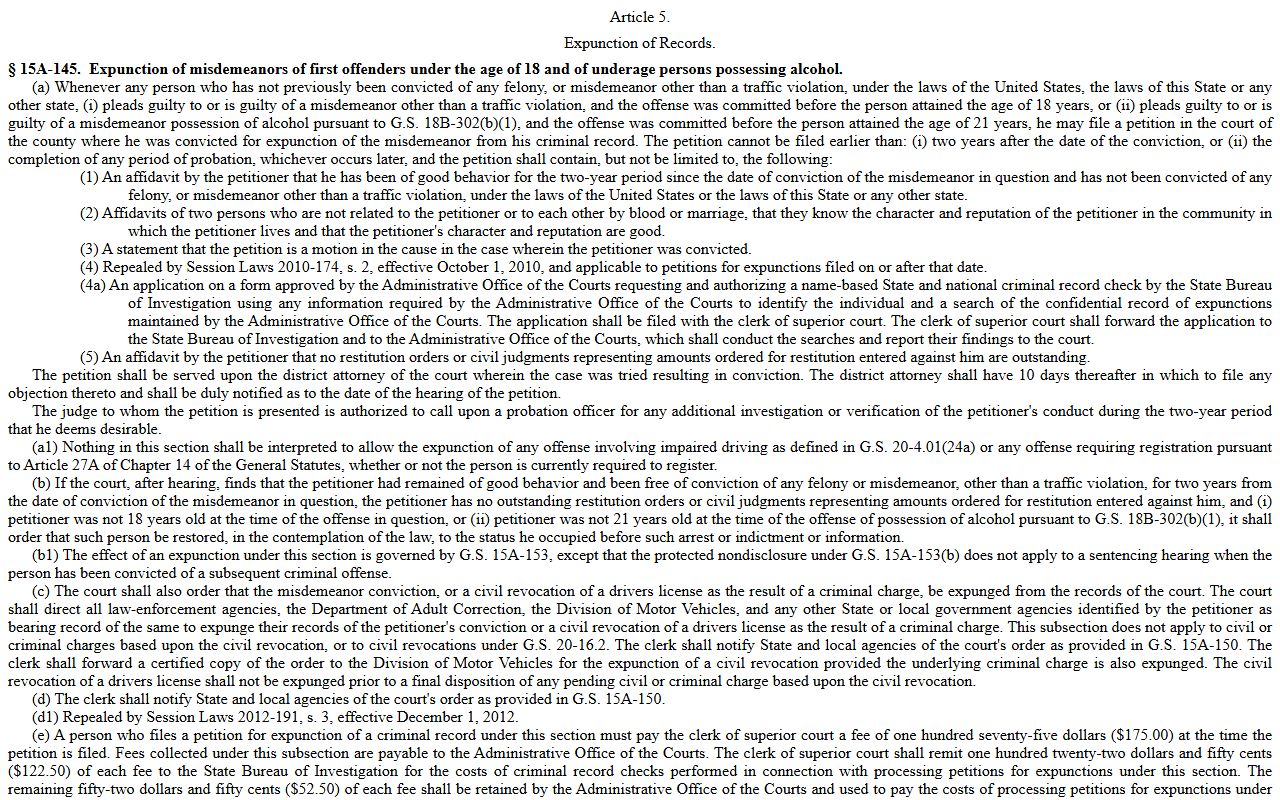
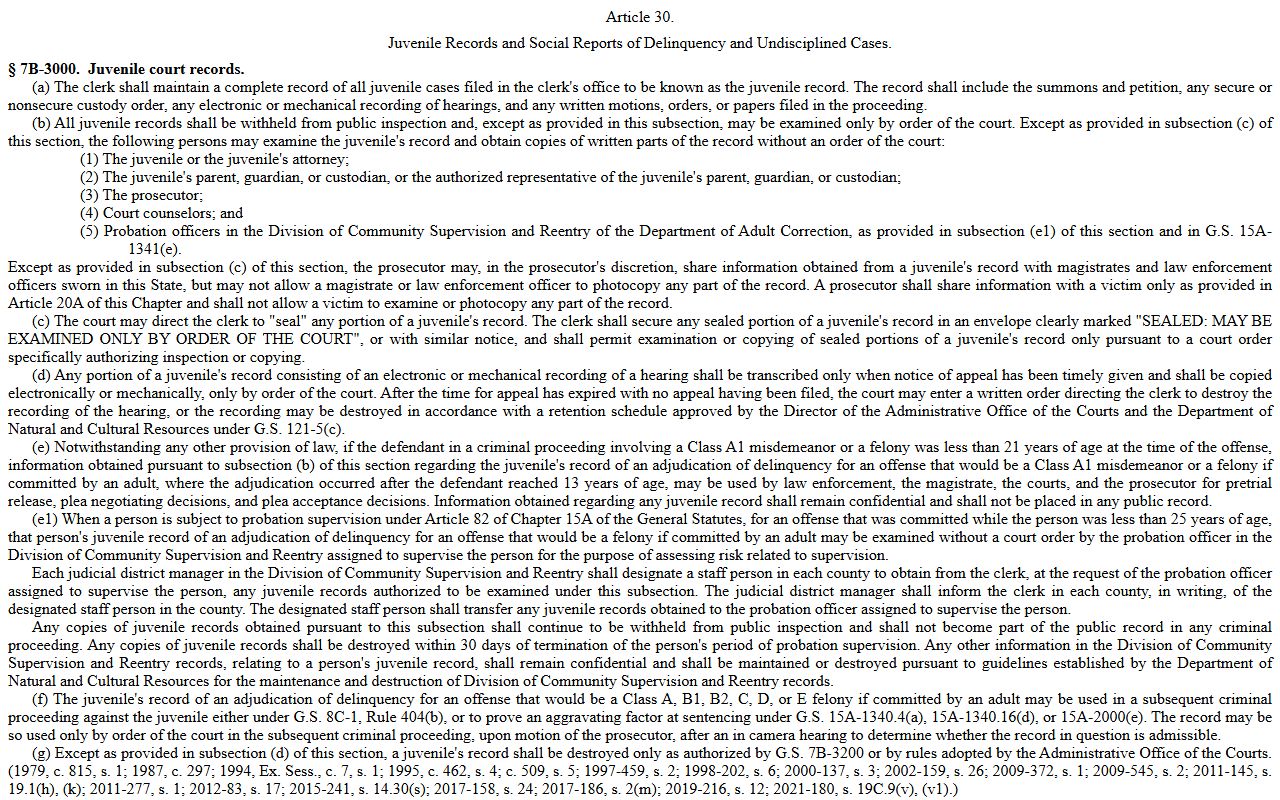
Restricted criminal court records require precise language. A sealed record is hidden from ordinary public access by statute or court order. An expunged record is removed from public access after a judge grants an eligible petition under Chapter 15A, Article 5. Juvenile records are a separate category with strong confidentiality rules under Chapter 7B. The public Portal should not be treated as proof that no case exists if sealed or restricted records are possible.
| Point | Sealed | Expunged |
|---|---|---|
| Visibility | Hidden from general public access by law or court order. | Removed from public access after an eligible expunction is granted. |
| How It Happens | By statute, court order, or case type restriction. | Through a petition and court order under eligible expunction statutes. |
| Public Search Effect | The Portal may not show the case or may limit details. | The public should not expect the record to appear after the order is processed. |
| Examples | Sealed cases, confidential filings, protected identifiers, certain sensitive material. | Eligible criminal charges removed after statutory review and court approval. |
The manifest includes official statute sources for Chapter 15A Article 5 expunction statutes and G.S. 7B-3000 juvenile confidentiality.
Juvenile confidentiality is covered by the official G.S. 7B-3000 statute source.
Pitt County Criminal Records Access
Public access to Pitt County criminal court records is shaped by both public-records law and court-record rules. G.S. 132-1 sets a broad public-records policy. G.S. 132-6 addresses inspection and copies for public records. G.S. 7A-109 connects clerks to court records, dockets, indexes, minutes, and related recordkeeping. Criminal investigation records have special treatment under G.S. 132-1.4, so a sheriff investigation file is not the same as a public criminal case file.
Use the correct channel. The Portal and Clerk of Superior Court are the official path for criminal case files. Pitt County's public-records request page is a county channel for county department records, subject to law-enforcement limits. The Detention Center tools show current custody, charge, sentence, or bond information for detained people, but those tools do not certify court outcomes. For an official copy of a Pitt County criminal judgment, disposition, or docket entry, use the clerk.
Restricted Pitt County Criminal Records
Restricted records include juvenile delinquency files, juvenile abuse or neglect matters, sealed cases, expunged records, mental-health or commitment-related materials, protected addresses, minor identifiers, financial account numbers, and other redacted data. Adoption records are not ordinary criminal court records, but the same public-access principle applies: sensitive court files can be unavailable to public searchers even when a related public event is known.
A person seeking expunction should start with the North Carolina Judicial Branch expunction resources and the official forms library. Eligibility depends on the charge, outcome, age at offense, prior record, waiting period, and statute. The petition is usually filed in the county where the charge occurred, so qualifying Pitt County matters route through the Pitt County Clerk of Superior Court. A dismissed charge remains visible unless a valid expunction or sealing rule removes it from public access.
Pitt County Clerk of Superior Court
Pitt County Courthouse
100 West 3rd Street
Greenville, NC 27835
252-695-7100
Use the courthouse page for current hours, notices, records services, and court-date links.