
Pitt Clerk of Superior Court
North Carolina uses a unified trial-court filing system. Pitt County's primary court-record office is the Clerk of Superior Court, a state Judicial Branch office located in the Pitt County Courthouse. The clerk maintains Superior Court and District Court files, receives filings, issues plain and certified copies, administers estates and special proceedings, and keeps court minutes, judgments, dockets, and indexes under state court-record rules.
The Clerk of Superior Court is also the practical access point when an online case search is incomplete. Public Portal access is not the same as clerk access. Some records are not visible to anonymous users, some documents are courthouse-only, and some records are sealed, confidential, expunged, juvenile, or otherwise restricted.
The clerk should be treated as the authority for the court file, while other Pitt County offices should be used only for the records they actually maintain. That distinction is important for divorce judgments, estate letters, criminal dispositions, civil judgments, and traffic case records. A county public-records request may help with county department records, but it does not replace the court clerk for judicial records.
Pitt County Clerk of Superior Court
100 West 3rd Street
Greenville, NC 27835
252-695-7100
Use official court page for current hours.
Pitt Clerk Duties
The clerk's work touches most court-record requests in Pitt County. Civil complaints, criminal case files, domestic cases, traffic records, judgments, special proceedings, estates, and certified copy requests all route through the court clerk instead of a county-built case database. A person searching court records should start with the eCourts Portal when online access is enough, then use the clerk for the file or copy that must be official.
The clerk also supports the record side of court events. Hearings, continuances, judgments, orders, bonds, costs, appeal notices, and payment entries become part of the case history when they are entered in the file. A user who only sees a docket summary may still need the underlying order or judgment to understand what happened.
- Maintain Superior Court and District Court files for Pitt County.
- Issue plain, file-stamped, and certified court copies.
- Receive filings and maintain dockets, minutes, judgments, and indexes.
- Administer estates and special proceedings as clerk and probate judge.
- Support jury, courtroom, calendar, and payment functions tied to the courthouse.
The North Carolina small claims help topic shows why magistrate and clerk functions often overlap in lower-value civil matters.
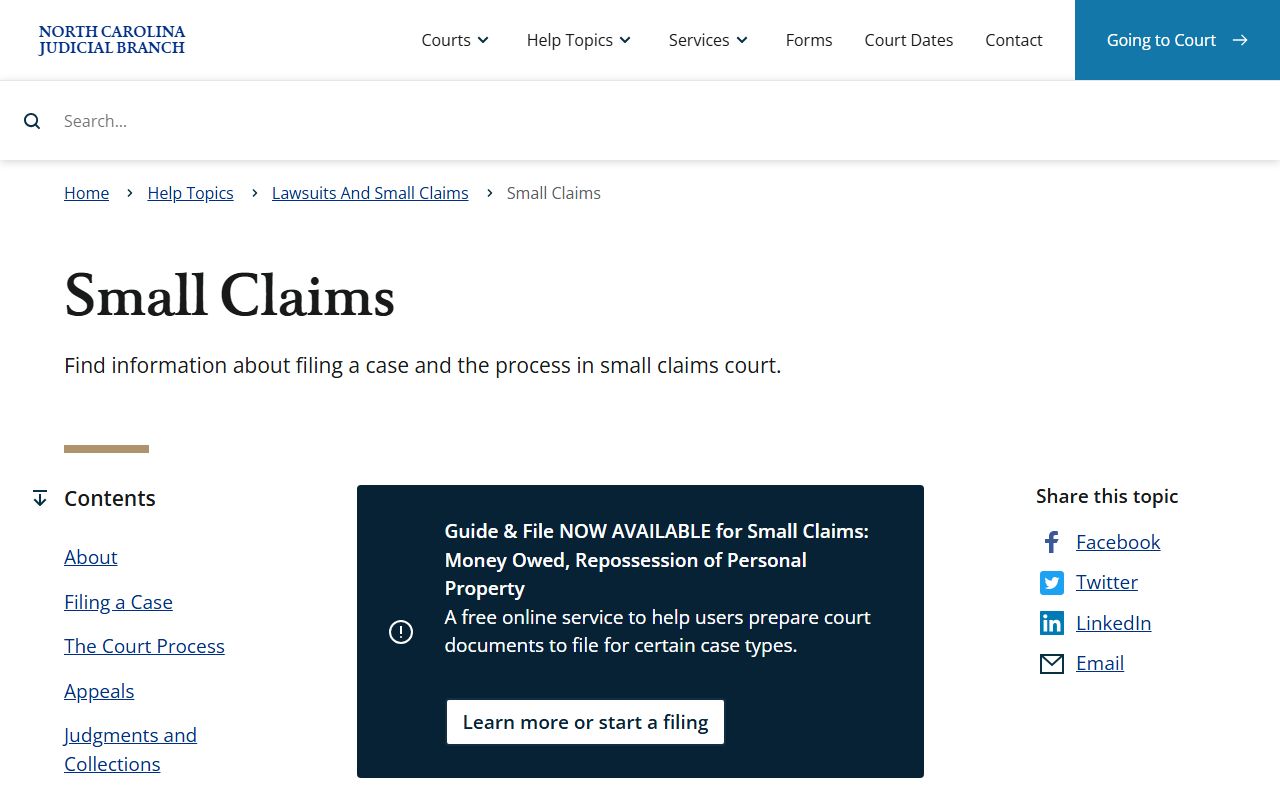
Small claims records may begin with magistrate proceedings, but clerk records and appeals still matter in the court file.
Request Pitt Certified Copies
Certified copies are needed when a court record must prove filing, judgment, divorce, disposition, estate authority, or another official act. A Portal screen or informal printout is useful for locating the case, but it does not replace certification by the clerk. Bring or provide the case number when possible, because the exact file number is the most efficient way to locate the record.
Before requesting certification, decide whether the entire case file is needed or only a specific document. A certified judgment, certified disposition, certified divorce decree, certified letters, or certified order may be faster and less costly than copying a full file. If the request involves a restricted case, the clerk may need to verify party status, attorney role, or a court order before release.
- Search the N.C. eCourts Portal or your notice to identify the case number and party names.
- Decide whether you need a plain copy, file-stamped copy, or certified copy.
- Contact or visit the Clerk of Superior Court at the Pitt County Courthouse with the case details.
- Pay the applicable statewide court fee and request mailing, pickup, or other available delivery.
- Verify restricted, sealed, juvenile, expunged, or confidential records with the clerk before expecting access.
Pitt Records Request Fields
A useful court-record request gives the clerk enough detail to locate the correct file and produce the right document. Pitt County court records are not all searched by the same field, so a criminal disposition request, divorce judgment request, estate-copy request, and civil judgment request may need different identifiers.
When the case number is unknown, give the broadest accurate set of names and dates. Criminal files may be styled State v. Defendant. Civil files may be styled Plaintiff v. Defendant. Estate matters may use the decedent or estate caption. Domestic files may require both party names and a filing range to avoid common-name matches.
| Field | Required | Notes |
|---|---|---|
| Case number | Best when known | Use the full court file number from eCourts, notice, or prior copy. |
| Party names | Yes | Include plaintiff, defendant, State, petitioner, respondent, decedent, or estate name. |
| Document type | Yes | State whether you need judgment, order, disposition, divorce decree, letters, or full file review. |
| Copy type | Yes | Plain, file-stamped, or certified copy. |
| Contact and delivery details | Yes | Provide phone, mailing address, pickup preference, and payment method as accepted by the clerk. |
Pitt County Clerk Fees
Court fees should be checked against the official statewide chart before a filing or copy request. The research file does not provide fixed copy or certification amounts. It directs users to the Judicial Branch fee publication, which is the right source for current clerk charges, estate fees, filing costs, and certification fees.
If a request is urgent, ask the clerk how payment and pickup work before sending it by mail. Some copy requests require staff time to identify the file, review access limits, count pages, and prepare certification. The statewide chart controls the fee category, but the clerk can explain how that fee applies to the specific Pitt County request.
| Item | Office | Fee / Note |
|---|---|---|
| Plain court copies | Clerk of Superior Court | Use the current statewide court costs and fees chart. |
| Certified court copies | Clerk of Superior Court | Use the current statewide court costs and fees chart. |
| Estate and probate filings | Clerk of Superior Court | Use the current statewide court costs and fees chart. |
| Marriage license | Register of Deeds | Use the current Pitt County Register of Deeds fee schedule. |
| Register of Deeds redaction request | Register of Deeds | eSearch notice says qualifying online redaction requests are free. |
Note: Marriage license fees are included here only to show the office split; they are not Clerk of Superior Court fees.
Clerk Versus Register
The Pitt County Register of Deeds is a separate county office. It handles marriage licenses, recorded land documents, notary records, assumed names, and certain vital-record copy functions. It is not the office for criminal case files, civil case files, probate litigation records, divorce litigation files, or court judgments. Requesting the right office first saves time and reduces rejected requests.
The Pitt County Register of Deeds office page is the local source for recorded documents and marriage-related records.
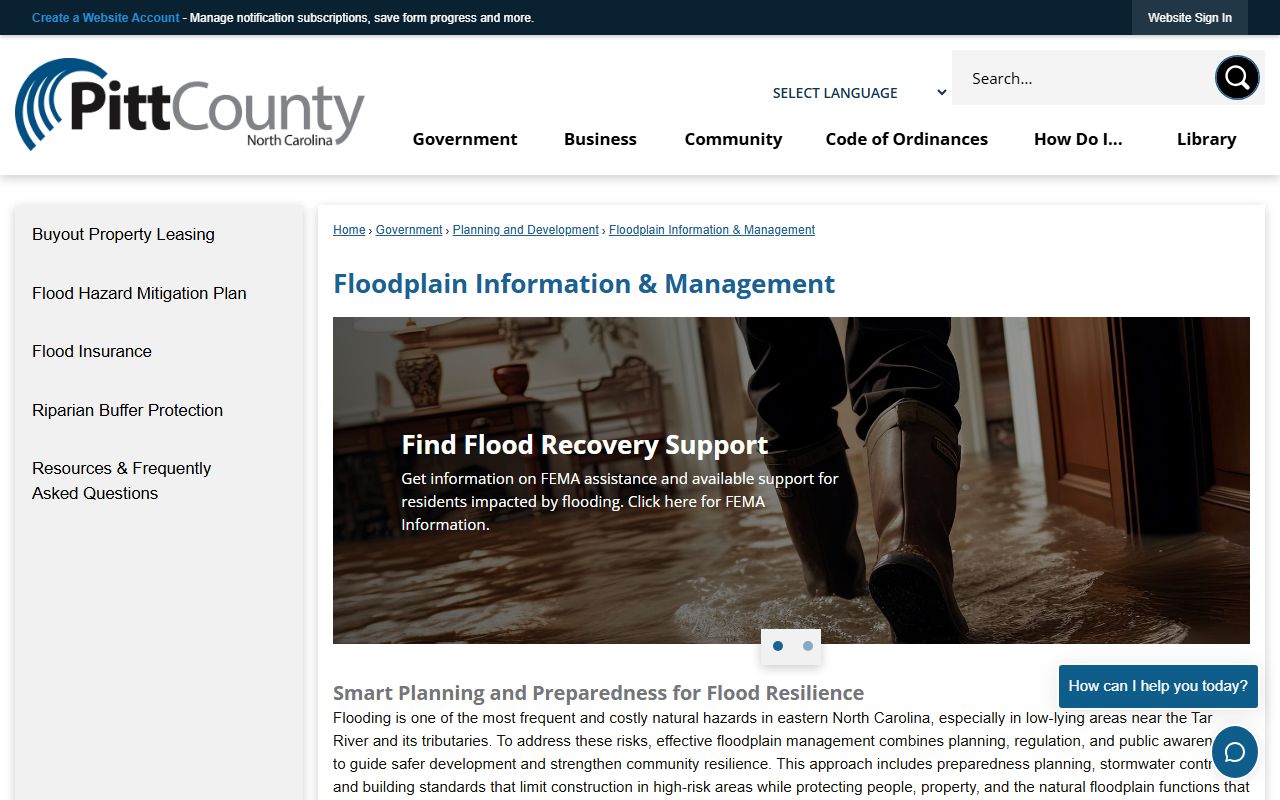
That office page helps distinguish county recording functions from the state court clerk's case-file role.
The Register of Deeds eSearch portal allows guest sign-in for recorded-document searches.
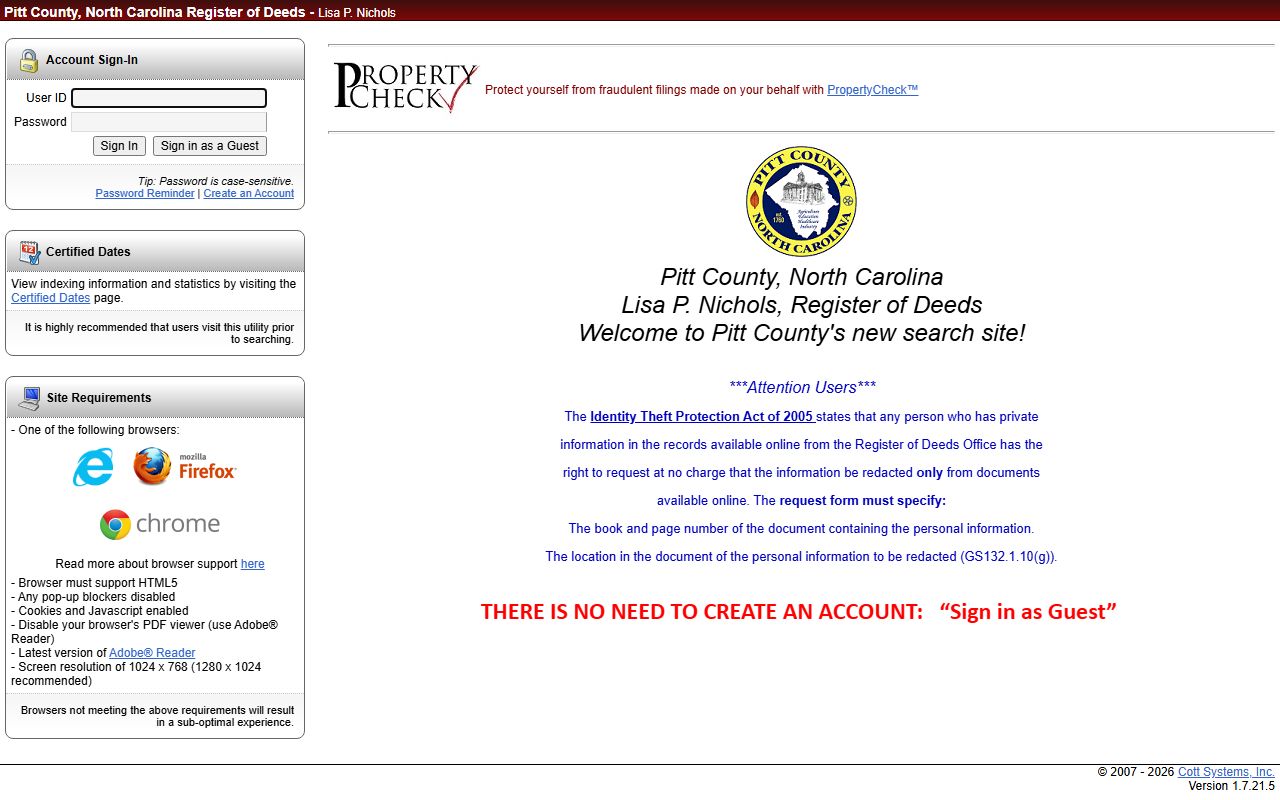
eSearch is useful for recorded documents and some marriage-related records, not for Superior Court or District Court case files.
Pitt Clerk Forms
The North Carolina Judicial Branch forms library is the safest starting point for court forms. It includes estate, civil, criminal, family, expunction, and domestic violence forms. Pitt County users should avoid outdated third-party forms because North Carolina court forms and filing rules can change.
- Estate and probate forms for clerk-supervised estate matters.
- Civil forms for complaints, motions, judgments, and post-judgment matters.
- Family and divorce forms tied to District Court domestic filings.
- Criminal and expunction forms for eligible record-clearance requests.
Pitt Online Access
Online access for court records begins with the eCourts Portal and Judicial Branch online services, not a Pitt County clerk-owned portal. The clerk remains the fallback for complete files, certified records, older paper records, estate files, judgments, and restricted-access questions. County public-records requests are useful for county department or sheriff administrative records, but judicial records should route through court channels.
The same rule applies when a user is comparing court records with sheriff or jail records. A charge or bond entry from a jail application can help identify an arrest-to-charge event, but the court case, plea, disposition, judgment, sentence, and appeal history belong in the court record maintained through the clerk and state court system.
North Carolina Vital Records may issue certified vital-record certificates for some events, but it does not replace the court clerk for certified divorce judgments or court case files. The official North Carolina Vital Records site is a separate channel from the clerk.
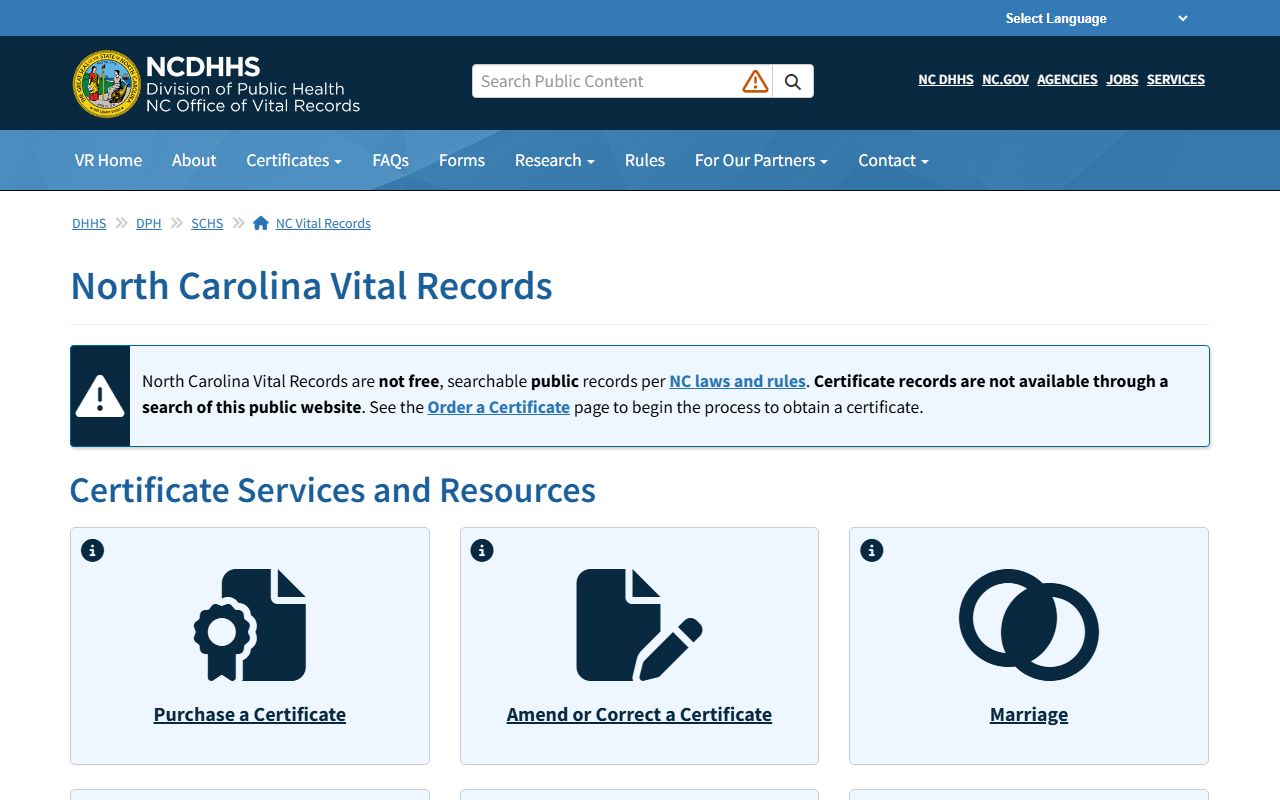
Vital Records can support certificate needs, while the Pitt County Clerk of Superior Court handles the judicial record.