
Search Pitt County Court Records
The main online path for Pitt County court records is the N.C. eCourts Portal. The Portal is the statewide public search system for eCourts counties, so Pitt County Superior Court, District Court, traffic, civil, domestic, estates, special proceedings, and criminal case data should be checked there when the record is public and loaded into the system. Pitt County does not run a separate county-only court case database for the General Court of Justice.
Use the Portal first for a name, case number, citation number, party, hearing, or filing-date search. Then use the Pitt County Clerk of Superior Court at the courthouse when a result is missing, when a certified copy is needed, or when the file is older, sealed, restricted, or not available to anonymous Portal users. The Judicial Branch Portal training resources are useful for public search screens and registered-account functions.
- Open the N.C. eCourts Portal and choose the public case search or hearing search option.
- Search by case number when known. For broader searches, enter a person name, business name, or citation number.
- Use Pitt County, Pitt County Courthouse, case category, filing date, hearing date, or status filters to reduce false matches.
- Open the matching case and review the case number, court level, parties, events, hearings, financials, and status.
- Contact the Clerk of Superior Court for certified copies, full files, older paper records, and records not displayed online.
| Portal Field | How It Helps | Best Use |
|---|---|---|
| Smart Search / Search | Looks for names, businesses, case numbers, or citation-style entries | Broad Pitt County court records lookup |
| Case Number | Targets one known file number | Copy requests and exact case review |
| Party Name | Searches first, last, or business names | Civil, criminal, domestic, and probate cases |
| Citation Number | Finds traffic and citation matters | Traffic tickets and infractions |
| County / Location | Filters statewide results to Pitt County | Avoiding results from other counties |
| Filing or Hearing Date | Narrows common names and calendar searches | Docket and appearance checks |
Pitt County Courthouse Access
The official North Carolina Judicial Branch Pitt County page routes users to court locations, calendars, jury service, payments, online services, family court, and county notices. The Pitt County Courthouse page lists the main court address and courthouse phone number for Greenville. It is the practical in-person access point for court filings, clerk questions, copies, court dates, and courthouse-specific notices.
The courthouse sits in downtown Greenville, while the detention center is at a different address on New Hope Road. That split matters. Court files, certified copies, estate matters, filings, and calendars route through the courthouse and the Clerk of Superior Court. Current custody, booking, charge, bond, mail, and detention questions route through the Pitt County Detention Center and sheriff channels.
Clerk of Superior Court
100 West 3rd Street
Greenville, NC 27835
252-695-7100 courthouse line
Pitt County Detention Center
124 New Hope Road
Greenville, NC 27834
Use the official detention page
The official courthouse source below shows the local courthouse page used for address, phone, court-location, and visitor planning facts.
View the official Pitt County Courthouse source.
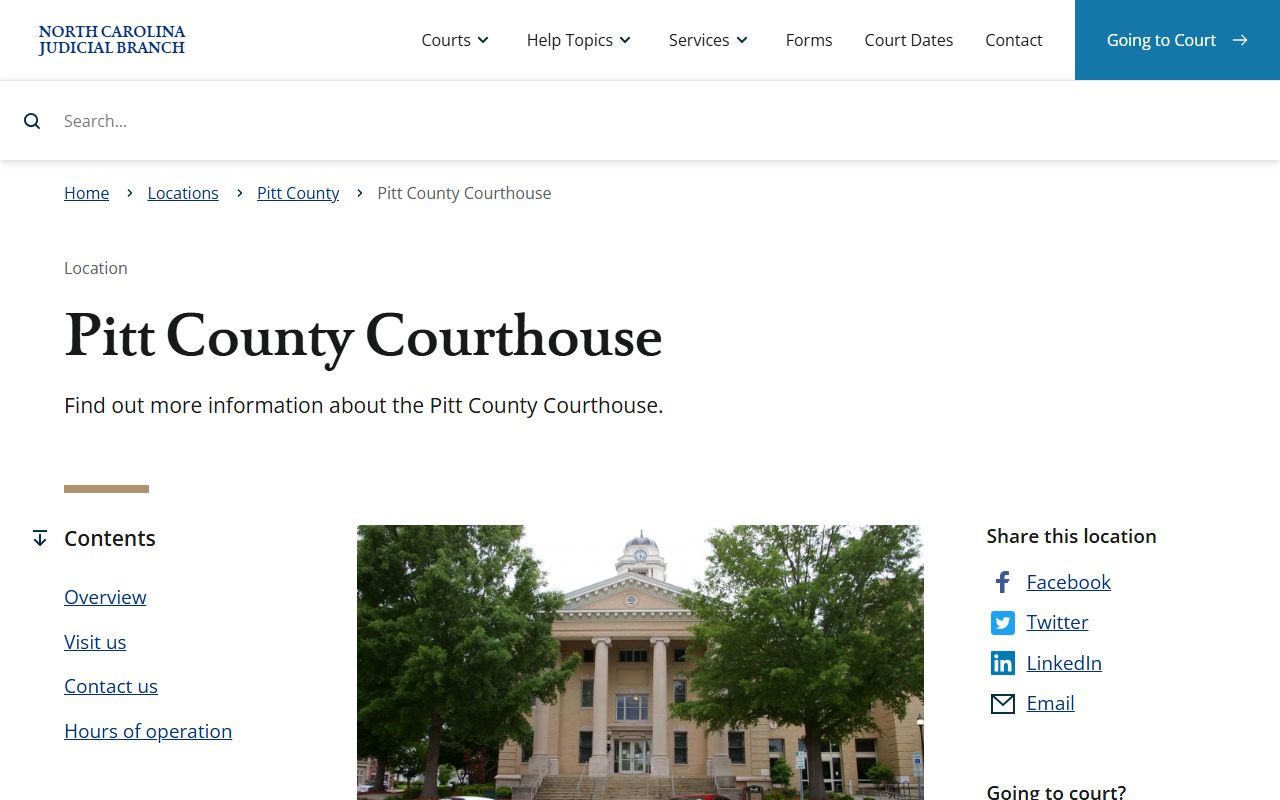
Use the courthouse source for current arrival details instead of relying on stale parking or entry instructions.
Pitt County Court System
North Carolina uses a unified General Court of Justice. Pitt County cases are not split into county JP courts or local district clerk portals. The main state trial courts are Superior Court and District Court, with magistrates serving within the District Court system. Appeals normally move to the North Carolina Court of Appeals, with selected matters reaching the Supreme Court of North Carolina.
Superior Court is the primary trial court for felony criminal cases, higher civil matters, special proceedings, and appeals from District Court. District Court handles misdemeanors, infractions, traffic cases, domestic matters, juvenile matters, small claims appeals, and lower civil cases. Magistrates handle small claims, summary ejectment, warrants, initial criminal process, bond issues, first appearances, and marriage ceremonies.
| Court or Office | Role in Pitt County | Common Records |
|---|---|---|
| Superior Court | Higher trial court | Felonies, higher civil cases, appeals, special proceedings |
| District Court | Lower trial court | Misdemeanors, traffic, domestic, juvenile, lower civil cases |
| Magistrates | Judicial officials within District Court | Warrants, bonds, first appearances, small claims |
| Clerk of Superior Court | Court record keeper and probate judge | Case files, indexes, copies, estates, special proceedings |
| Register of Deeds | Separate county recording office | Marriage licenses, recorded instruments, real property records |
Case flow: Magistrate or District Court process > District Court or Superior Court hearing > Superior Court appeal or trial where applicable > North Carolina Court of Appeals > Supreme Court of North Carolina in selected cases.
The statewide court pages describe the roles of North Carolina Superior Court and North Carolina District Court.
Those statewide court descriptions explain why a Pitt County felony record and a Pitt County traffic citation may appear in different court levels.
Pitt County Court Record Types
Pitt County court records include civil complaints, summonses, answers, motions, judgments, liens, executions, criminal charging documents, warrants, indictments, pleas, bond conditions, dispositions, sentencing terms, family case filings, protective orders, probate files, small-claims cases, and traffic citations. The court level and record type control both where the file is searched and whether all documents are open to the public.
Use the North Carolina court records help page for official public-access and copy guidance. For online searches, use eCourts. For certified copies and full file access, use the clerk. For marriage licenses, use the Register of Deeds. For custody status, use the Pitt County detainee tools. For sentenced prisoners, use the state prison search, not the county jail search.
- Civil records: complaints, motions, orders, judgments, post-judgment filings, and collection records.
- Criminal records: charges, court dates, pleas, motions, dispositions, judgments, sentencing, and appeal notices.
- Family records: divorce, custody, child support, domestic violence, and related District Court files.
- Probate records: wills, letters, inventories, accountings, guardianship files, and estates records through the clerk.
- Traffic records: citations, court dates, waivable offenses, dispositions, fines, costs, and failure-to-appear entries.
The eCourts Portal source is the primary statewide entry point for public Pitt County court records searches.
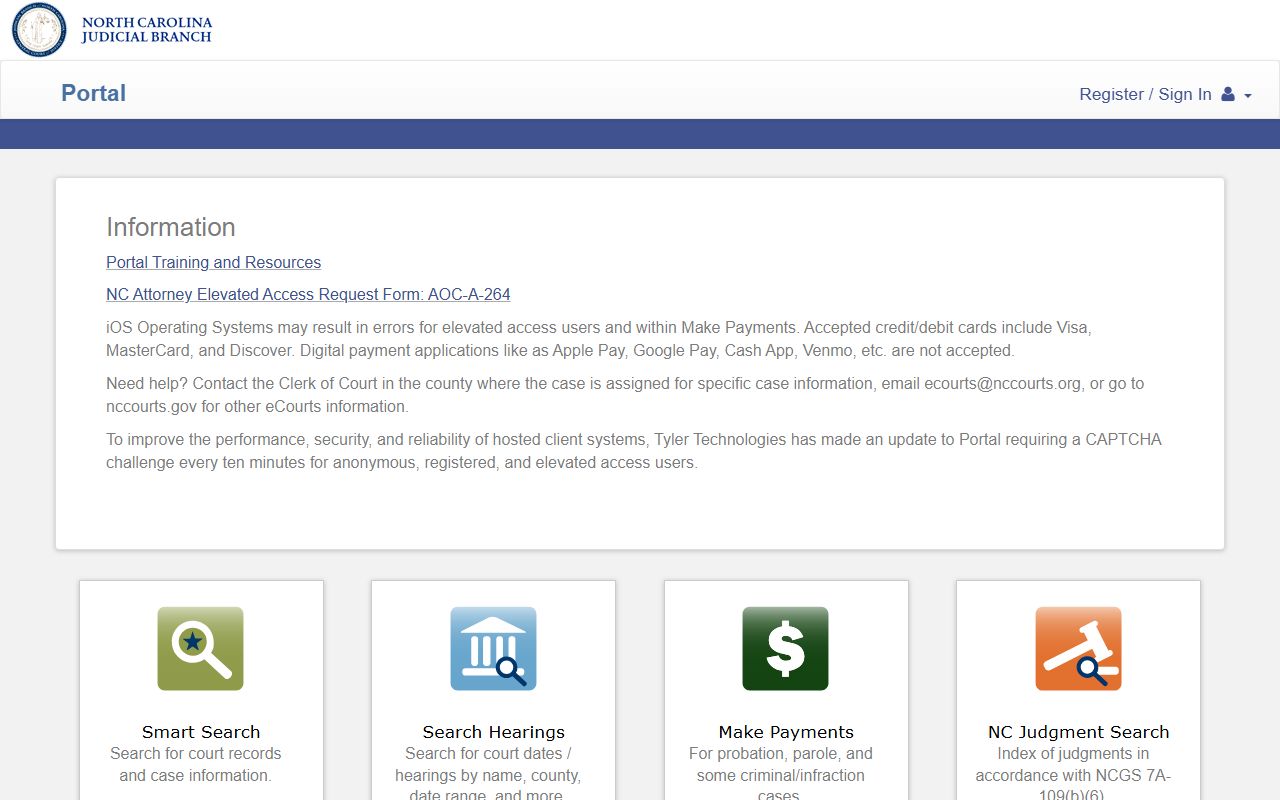
A Portal result is useful for lookup and docket review, but it is not the same as a certified copy from the Clerk of Superior Court.
Pitt County Case Record Details
A Pitt County case record usually begins with the case number, county location, court level, case type, filing date, status, parties, attorneys, and judicial officer. The docket then shows filings, notices, hearings, continuances, returns, orders, judgments, dispositions, and payment events. Traffic and criminal records may also show citation details, charges, bond information, fines, costs, restitution, or compliance entries.
Not all fields prove the same thing. A charge is an allegation or formal accusation. A conviction requires a guilty plea, verdict, or other outcome that results in guilt. A case marked open, pending, disposed, closed, sealed, dismissed, or inactive must be read with the docket history and final orders, not from the status label alone.
| Field | What It Shows |
|---|---|
| Case Number | The court file number used for Portal searches and copy requests. |
| Court Level | Whether the file is in Superior Court, District Court, magistrate, or clerk/estates channels. |
| Parties | Plaintiff, defendant, State, petitioner, respondent, decedent, estate, guardian, or ward. |
| Docket Entries | The timeline of filings, hearings, orders, judgments, continuances, and returns. |
| Disposition | The result of a charge, claim, motion, or case event. |
| Financials | Costs, fines, restitution, civil judgments, payments, balances, or bond entries where shown. |
- Docket
- The chronological list of case events and filings.
- Disposition
- The outcome of a charge, claim, motion, or court event.
- Expunction
- A court order that removes eligible criminal records from public access.
- Sealed
- Hidden from ordinary public access by law or court order.
Pitt County Public Access Laws
Public access in Pitt County depends on the difference between judicial records, county department records, and law-enforcement investigation records. Court files are maintained by the Clerk of Superior Court under the state judicial record system. County executive or sheriff administrative records may route through Pitt County's public-records request process. Criminal investigation files have special limits and should not be treated like ordinary open records.
North Carolina's public-records laws and court-record statutes set the baseline, but they do not make every record open. Juvenile files, adoption files, mental-health proceedings, sealed matters, expunged records, protected addresses, financial account numbers, Social Security numbers, and sensitive minor information may be confidential, redacted, or limited to parties and authorized users.
Key North Carolina access rules:
G.S. 132-1 defines public records broadly unless another law restricts access.
G.S. 132-6 covers inspection and copies of public records at reasonable times.
G.S. 132-1.4 gives criminal investigation records special treatment.
G.S. 7A-109 addresses clerk-maintained records, dockets, and indexes.
G.S. 7B-3000 makes juvenile records confidential.
The official court-records help source explains copies, confidential cases, courthouse terminals, and public-access limits.
The public-access rules are why a Portal search may show a case summary but withhold some documents or record categories.
Pitt County Criminal and Jail Records
Criminal case records and jail custody records are related but separate. The court case record tracks charges filed in court, hearings, pleas, motions, dispositions, sentencing, fines, costs, and appeal events. The jail record tracks current detention, booking, charge, sentence, and bond information for people held at the Pitt County Detention Center.
The Pitt County Detainee Search is for current detainees and can be run with blank fields to retrieve all active detainees. The page says it refreshes hourly. The Pitt County Charge Inquiry gives current or recent charge and bond information for people charged at the Detention Center. On June 17, 2026, the charge page showed a rolling range from May 18, 2026 through June 17, 2026, which means it is not a full criminal-history database.
| Tool | Best For | Limit |
|---|---|---|
| Detainee Search | Current custody and detainee information | County jail only, refreshed hourly |
| Charge Inquiry | Current or recent charge and bond information | Rolling date range, not final court outcomes |
| eCourts Portal | Filed criminal case records and hearings | Not a real-time active jail roster |
| NCDAC Offender Search | Sentenced state prisoners | Separate from county pretrial custody |
For the official county law-enforcement source, use the Pitt County Sheriff's Office page.
Pitt County Marriage Divorce Probate
Marriage, divorce, and probate records do not all live in one office. Pitt County marriage licenses and recorded marriage records are handled by the Pitt County Register of Deeds. Divorce files are court cases handled through District Court and the Clerk of Superior Court. Probate and estates are handled by the Estates Division of the Clerk of Superior Court because the clerk serves as probate judge in North Carolina.
The Pitt County Register of Deeds is the local starting point for marriage licenses, recorded instruments, and related copy channels. Its Register of Deeds eSearch portal allows guest sign-in and names Lisa P. Nichols as Register of Deeds. The eSearch notice also says qualifying online redaction requests for private information can be made at no charge under the Identity Theft Protection Act, with the book/page and location of the private information identified.
- Marriage license
- Apply through the Pitt County Register of Deeds before the ceremony.
- Divorce judgment
- Get certified court copies through the Clerk of Superior Court.
- Executor
- The person named to administer an estate when approved by the clerk.
- Letters
- Clerk-issued authority for a personal representative to act for an estate.
Pitt County Traffic Court Records
Pitt County traffic court records are court files. NCDMV driving records are driver-license files. A citation may appear in eCourts and later affect a DMV record, but those are separate systems. The court record shows the traffic case, citation, court date, plea or disposition, fine, costs, failure-to-appear entries, and compliance. The DMV record shows license status, convictions reported to DMV, points, suspensions, restorations, and driver-history data.
Start with the Judicial Branch traffic violations page for payment and contest options. Use eCourts for citation and case lookup. Use the NCDMV driving-records page for official driver history. Impaired driving, some serious traffic charges, and CDL matters may have criminal or license consequences beyond the fine shown online.
The eCourts program source explains the statewide technology shift that affects Pitt County case lookup and court services.
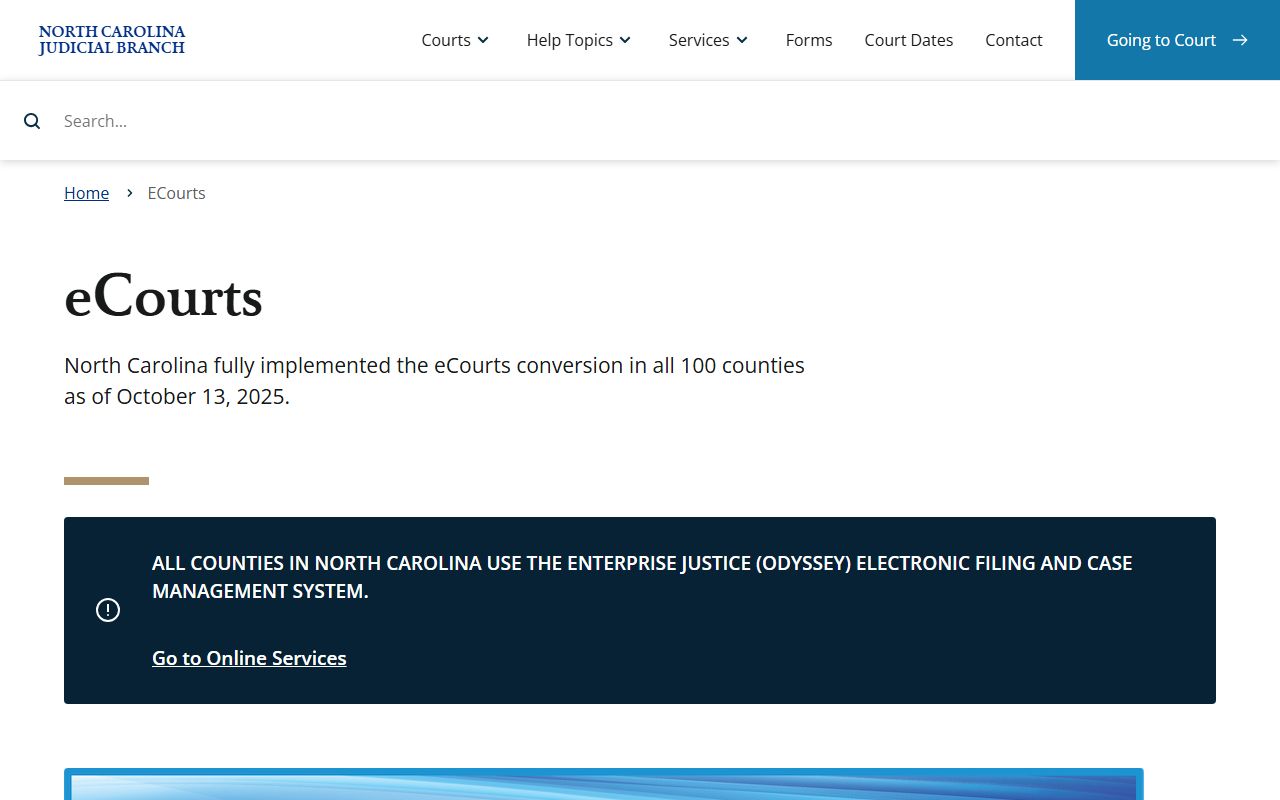
Because eCourts is statewide, filtering to Pitt County is important when a name or business search returns matches from other counties.
Pitt County Court Records Fees
Fees should be checked through the office that issues the document. Court copy, certification, filing, estate, and civil fees route through the statewide court costs and fees chart. Marriage-license and recorded-document fees route through the Pitt County Register of Deeds. DMV record fees route through NCDMV. Do not treat a free online search as proof that a certified copy is free.
| Item | Office | Fee Source |
|---|---|---|
| Plain court copies | Clerk of Superior Court | Current statewide court costs and fees chart |
| Certified court copies | Clerk of Superior Court | Current statewide court costs and fees chart |
| Estate or probate filings | Clerk of Superior Court | Current statewide court costs and fees chart |
| Marriage license | Register of Deeds | Current Pitt County Register of Deeds fee schedule |
| Driving record | NCDMV | Current NCDMV records request rules |
Note: Use the current official fee source before paying, because court, DMV, and Register of Deeds fees can change.
Pitt County Federal Records
Pitt County state court records are not federal court records. Federal civil and criminal cases from Pitt County are handled through the U.S. District Court for the Eastern District of North Carolina. Bankruptcy matters route through the U.S. Bankruptcy Court for the Eastern District of North Carolina. Appeals go to the U.S. Court of Appeals for the Fourth Circuit.
Federal court records are accessed through PACER or the specific federal court's CM/ECF system. They do not appear in the Pitt County Clerk of Superior Court files or the N.C. eCourts Portal. Federal criminal prosecutions are handled by the U.S. Attorney's Office for the Eastern District of North Carolina, and federal warrants or detainee transport may involve the U.S. Marshals Service.
Pitt County Court Records History
Pitt County's court-record tradition is tied to Greenville's role as the county seat and government center. Older local recordkeeping centered on courthouse offices, docket books, paper files, and elected local officers. Modern access is different. Trial-court administration is now part of the statewide North Carolina Judicial Branch, and public searches increasingly route through eCourts rather than a county-only index.
The local distinction still matters. The Clerk of Superior Court remains the local elected officer for court records, estates, special proceedings, copies, and indexes. The Register of Deeds preserves a different record line for marriage licenses, recorded instruments, and land records. The Detention Center maintains custody tools separate from the courthouse. A good Pitt County records search starts by choosing the right office before choosing the search field.
Pitt County Court Records FAQ
Where do Pitt County court records start?
Most public case searches start in the N.C. eCourts Portal. Certified copies, older files, and records not visible online should be requested from the Pitt County Clerk of Superior Court.
Are jail records the same as criminal court records?
No. The Detainee Search and Charge Inquiry tools show current custody, charge, sentence, and bond information tied to the Pitt County Detention Center. The criminal court file shows filed charges, hearings, pleas, dispositions, and sentencing.
Who handles Pitt County marriage records?
The Pitt County Register of Deeds handles marriage licenses and recorded marriage records. Divorce files are court records, and divorce judgments come from the Clerk of Superior Court.
Can every Pitt County record be viewed online?
No. Public Portal access is not full clerk access. Sealed, juvenile, adoption, mental-health, expunged, older paper, and document-image-limited records may require an official office or may be closed to the public.
What is the best way to search a traffic ticket?
Use the citation number in eCourts or official Judicial Branch citation services. Then use NCDMV separately if the issue is license status, points, or a certified driving record.